The History of White Marble
White marble has a remarkable history that stretches back thousands of years. Long before it became a popular choice for luxury kitchens and countertops, marble was used by ancient civilizations to create some of the world’s most famous buildings, sculptures, temples, and monuments.
The ancient Greeks were among the earliest civilizations to use white marble extensively. They valued the stone for its beauty, durability, and ability to be carved into precise shapes and intricate details. Some of the most iconic structures of ancient Greece were constructed using marble, including the Parthenon in Athens.
The Romans later adopted and expanded the use of marble throughout their vast empire. White marble became closely associated with wealth, power, and architecture. It was used for columns, floors, walls, statues, and decorative elements in villas, public buildings, and monuments. Roman architects also imported marble from different regions to achieve distinctive colors and patterns.
One of the most famous varieties is Carrara marble, quarried in the mountains near Carrara, Italy. Carrara has been used for centuries by renowned artists and architects, including Michelangelo, who famously selected Carrara marble for some of his most celebrated sculptures.
Today, white marble continues this long tradition of craftsmanship and luxury. While its applications have expanded from historic monuments to modern homes, its natural beauty remains unchanged. Every slab carries its own veining and character, connecting today’s kitchens with a material that has been admired for thousands of years.
For homeowners choosing white marble countertops, the appeal is more than simply a beautiful surface—it is a piece of natural history brought into the home.
Table of Contents
- White Marble Kitchen Countertops: The Ultimate Guide to Luxury, Style & Timeless Beauty
- Why White Marble Kitchen Countertops Never Go Out of Style
- The Natural Beauty of White Marble
- Why Choose White Marble Kitchen Countertops? Benefits, Beauty, and Timeless Elegance
- What Is the Best White Marble for Kitchen Countertops?
- What is Popular Types of White Marble
- Is White Marble Good for Kitchens?
- Honed vs. Polished White Marble: Which Finish Is Best for Your Countertop?
1. White Marble Kitchen Countertops: The Ultimate Guide to Luxury, Style & Timeless Beauty

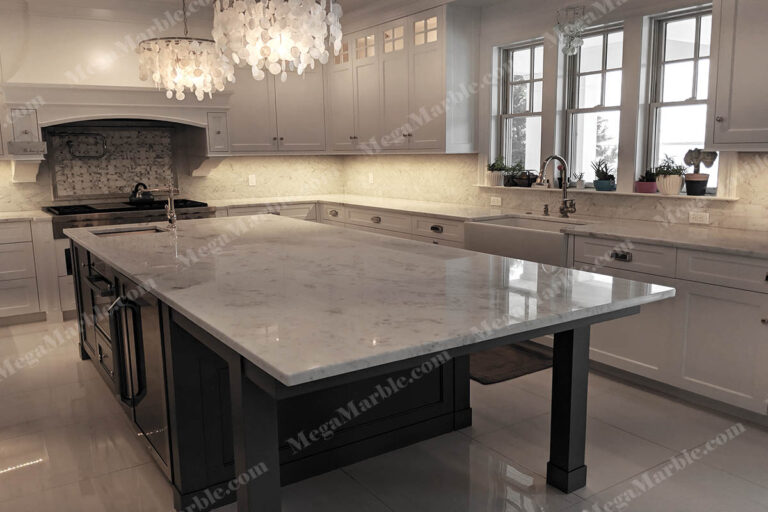
White marble kitchen countertops have remained one of the most prestigious choices in home design for centuries. Admired for their natural beauty, distinctive veining, and timeless elegance, they continue to define luxury kitchens around the world. From classic European estates to modern New York penthouses, white marble creates a sophisticated atmosphere that few other materials can match.
Unlike manufactured surfaces, every slab of white marble is formed naturally over millions of years. No two pieces are ever identical, making each countertop a unique work of art. Whether you’re designing a contemporary kitchen or restoring a traditional home, white marble offers an unmatched combination of beauty, character, and long-term value.
2. Why White Marble Kitchen Countertops Never Go Out of Style

Design trends come and go, but white marble has remained a favorite among architects, interior designers, and homeowners for generations. Its bright appearance reflects natural and artificial light, making kitchens feel larger, cleaner, and more inviting.
The neutral white background pairs effortlessly with virtually any cabinet color, flooring material, backsplash, or appliance finish. Whether combined with natural wood, matte black fixtures, brushed brass hardware, or stainless steel appliances, white marble adapts beautifully to both classic and contemporary interiors.
Its timeless appeal also contributes to a home’s resale value. Many buyers associate genuine marble with craftsmanship, luxury, and high-end construction, making it one of the most desirable countertop materials available.
3. The Natural Beauty of White Marble

One of the greatest advantages of white marble is that every slab tells its own story. The elegant veins flowing through the stone were created by natural minerals during millions of years of geological transformation. These unique patterns cannot be duplicated, ensuring that every countertop is truly one of a kind.
White marble comes in a wide variety of shades and vein patterns. Some slabs feature subtle gray veining for a soft, understated appearance, while others display bold gold and charcoal veins that create dramatic visual impact.
Beyond kitchens, white marble is frequently used for:
- Kitchen countertops and islands
- Bathroom vanities
- Fireplace surrounds
- Accent walls
- Flooring
- Shower walls
- Staircases
- Luxury commercial interiors
Its versatility allows designers to create cohesive, elegant spaces throughout an entire home.
4. Why Choose White Marble Kitchen Countertops? Benefits, Beauty, and Timeless Elegance

White marble kitchen countertops have remained a symbol of elegance, luxury, and timeless beauty for centuries. From historic architecture to modern luxury kitchens, marble continues to be one of the most admired natural stones available. Beyond its stunning appearance, white marble offers several practical benefits that make it an excellent choice for homeowners who want a sophisticated and distinctive kitchen.
Timeless Elegance
White marble has been associated with luxury for thousands of years. Its bright appearance, natural veining, and refined character can transform an ordinary kitchen into an elegant and inviting space. Whether your style is traditional, contemporary, or modern, white marble complements a wide range of kitchen designs.
Every Slab Is Unique
One of the greatest advantages of natural marble is that no two slabs are exactly alike. Each piece develops its own unique combination of veining, movement, color, and natural patterns. This means your kitchen countertop can have a truly one-of-a-kind appearance that cannot be perfectly replicated by manufactured materials.
A Naturally Cool Surface
Marble naturally maintains a cooler surface temperature than many other countertop materials. This characteristic makes it especially popular with homeowners who enjoy baking and working with dough, pastries, and other temperature-sensitive ingredients.
Excellent Light Reflection
The bright surface of white marble helps reflect natural and artificial light throughout the kitchen. This can make the space feel brighter, more open, and more spacious, particularly in kitchens with limited natural light.
Adds Luxury and Character to Your Home
White marble is widely recognized as a premium natural building material. A beautifully selected and professionally fabricated marble countertop can become a focal point of the kitchen while adding a sense of luxury, character, and sophistication to the home.
A Beautiful Investment for Your Kitchen
For homeowners who appreciate natural materials and distinctive design, white marble countertops offer a combination of beauty, history, and individuality that is difficult to match. With proper care and maintenance, marble can remain a stunning centerpiece of your kitchen for many years.
5. What Is the Best White Marble for Kitchen Countertops?

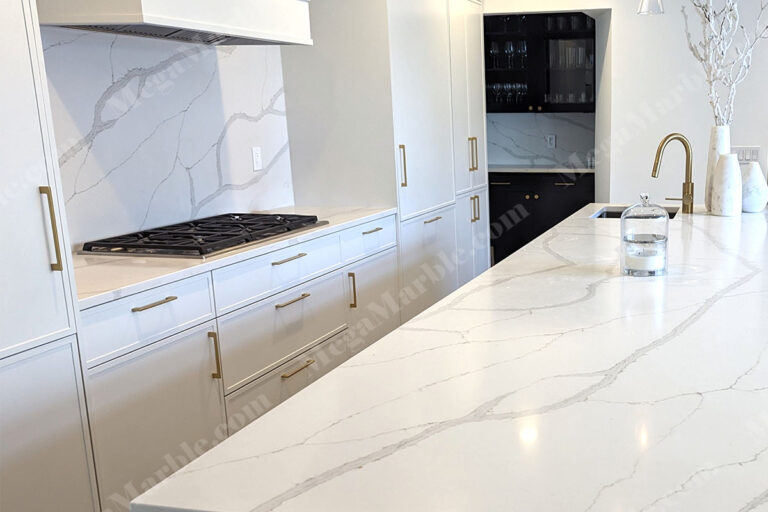
If you are looking for maximum luxury and dramatic veining, Calacatta marble is an excellent choice. Its beautiful white background and rich gray or golden veins create a truly luxurious appearance. High-quality Calacatta can be one of the most expensive white marbles available, with premium slabs starting around $15,000 or more, while slabs with less desirable patterns or quality can be found at lower prices.
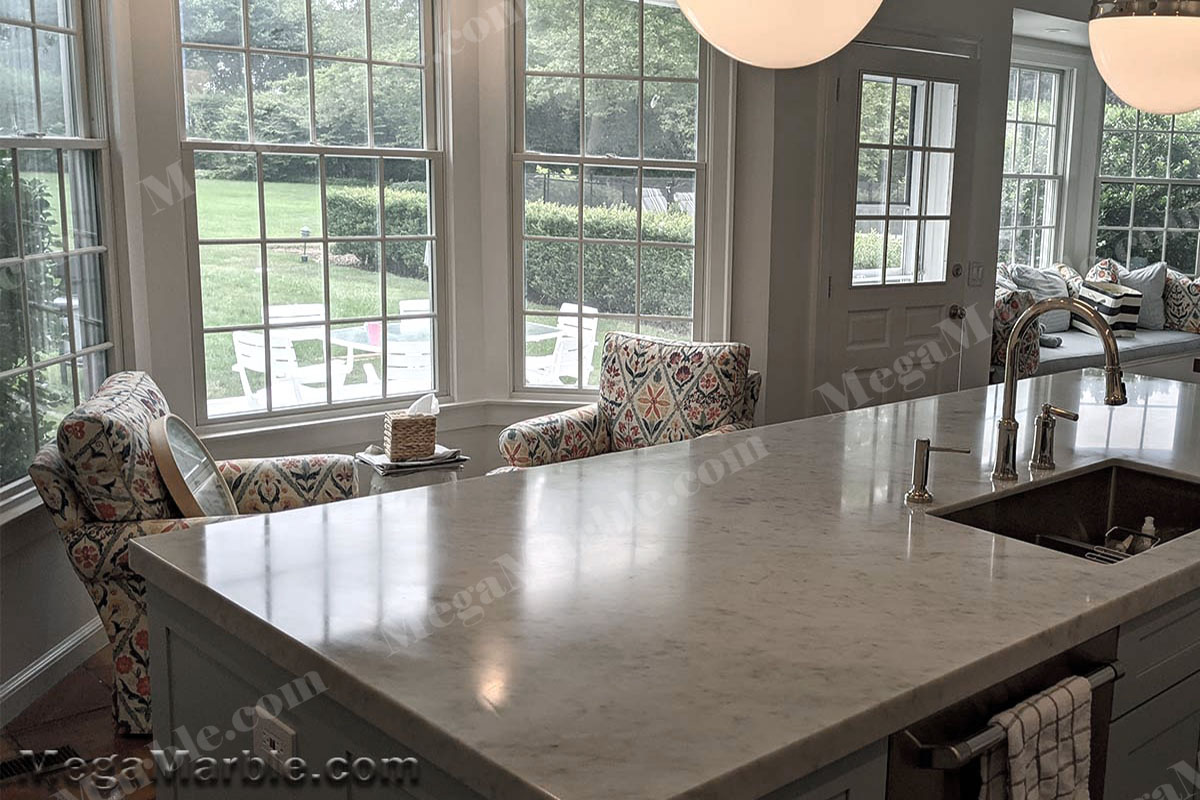
For a classic and timeless kitchen, Carrara marble is hard to beat. Carrara typically features a softer light-gray or white background with delicate gray veining. It is one of the most popular white marbles in the world and has a long and impressive history dating back centuries. Its traditional appearance makes it a favorite for both classic and modern kitchens.
If you want something bright, elegant, and sophisticated with distinctive veining, Statuario marble is another exceptional option. It generally has a lighter white background with striking gray to dark-gray veins. High-quality Statuario is also considered one of the more exclusive and expensive white marble varieties.
One important point to remember is that marble is a natural stone, so no two slabs are exactly alike. The best way to choose your countertop is to personally inspect the actual slab and its veining.
Whenever possible, consider working directly with an experienced stone fabricator or marble supplier. This allows you to see the material, understand its quality and pricing, and make an informed decision rather than selecting a stone based solely on a contractor’s recommendation.
6.What is Popular Types of White Marble


White Carrara Marble Slab
Italy is home to some of the world’s most celebrated white marbles. Among the many varieties available, three stand above the rest for kitchen countertops: Calacatta, Carrara, and Statuario marble.
Calacatta Marble
Calacatta marble is one of the rarest and most luxurious natural stones available. Quarried in Italy, it is famous for its brilliant white background and dramatic gray and gold veining. Its bold movement makes it an excellent choice for waterfall islands, luxury kitchens, and statement backsplashes.
Because of its rarity and limited quarry production, Calacatta marble is one of the most exclusive and desirable white marbles in the world.
Carrara Marble
Carrara marble is perhaps the world’s most recognizable marble. It features a soft white to blue-gray background with delicate, feathery gray veining that creates a refined and timeless appearance.
Its subtle elegance complements both traditional and contemporary kitchens, making Carrara one of the most popular choices for homeowners seeking authentic Italian marble.
Statuario Marble
Statuario marble combines a brilliant white background with bold, flowing gray veins that immediately capture attention. Produced in limited quantities, it remains one of the most prestigious natural stones available for luxury homes.
For homeowners seeking exceptional beauty and exclusivity, Statuario marble represents the pinnacle of Italian craftsmanship.
Calacatta vs. Carrara vs. Statuario Marble
| Marble Type | Background Color | Veining | Overall Appearance | Availability |
|---|---|---|---|---|
| Calacatta | Bright White | Bold Gray & Gold | Dramatic & Luxurious | Limited |
| Carrara | Soft White / Blue Gray | Fine Gray | Elegant & Classic | Widely Available |
| Statuario | Brilliant White | Bold Flowing Gray | Prestigious & Exclusive | Very Rare |
Each marble offers its own distinctive character. Whether you prefer the dramatic beauty of Calacatta, the timeless elegance of Carrara, or the exclusivity of Statuario, white marble kitchen countertops remain one of the finest investments for creating a luxurious and lasting kitchen.
7. Is White Marble Good for Kitchens?

White marble is one of the most popular natural stones for luxury kitchens, particularly among homeowners who appreciate timeless elegance and high-end design. Its bright background and natural veining create a sophisticated appearance that is difficult to replicate with manufactured materials.
However, white marble may not be the ideal choice for every kitchen. In a very busy kitchen, the stone can require more care and attention. Marble is naturally susceptible to scratching, staining, and etching, particularly when it is not properly sealed and maintained. For homeowners who are extremely concerned about keeping their countertops perfectly pristine, another material may be a better fit.
On the other hand, many homeowners actually appreciate the natural character that develops in marble over time. The subtle signs of use can give the stone a beautiful, authentic, lived-in appearance rather than making it look worn out.
Another advantage of marble is its naturally cool surface. This is one reason marble has been popular in professional kitchens, bakeries, pizzerias, and restaurants where dough and pastries are frequently prepared.
Modern professional sealers can provide excellent protection against many common stains and make marble easier to maintain. However, sealing does not make marble completely stain-proof or scratch-proof.
If your priority is luxury, natural beauty, and unique character, white marble can be an exceptional choice for your kitchen. If you have an extremely busy kitchen and want virtually maintenance-free countertops, you may want to consider other materials.
8. Honed vs. Polished White Marble: Which Finish Is Best for Your Countertop?
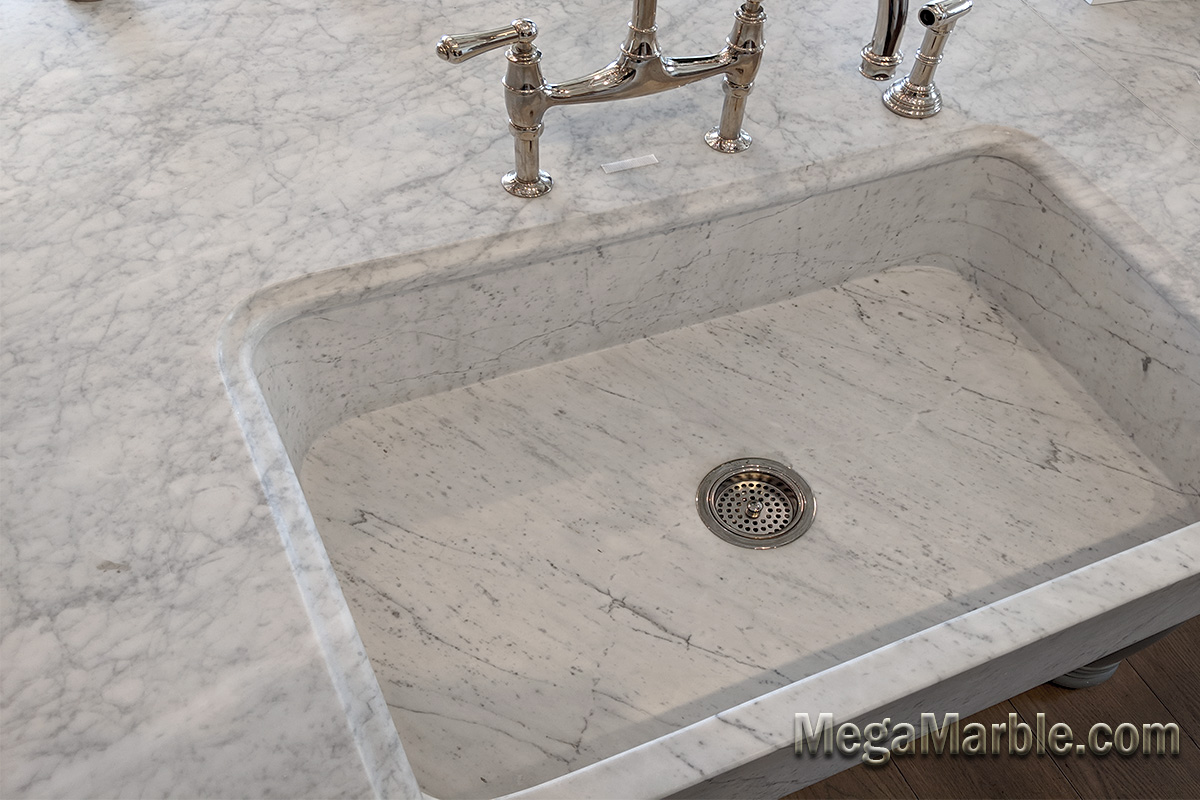
White marble is one of the most elegant and timeless natural stones, but choosing the right finish is just as important as choosing the marble itself. The two most common finishes are honed (matte) and polished, and each offers different advantages depending on your lifestyle, maintenance preferences, and design style.
A honed (matte) finish has a smooth, soft, non-reflective appearance that has become extremely popular in modern interior design. Today, many designers prefer the matte look because it creates a more natural, sophisticated, and contemporary feel. The softer appearance of honed marble works especially well with modern kitchens and luxury interiors because it allows the beauty and natural character of the stone to stand out without a strong reflection.
Since a honed finish has a more open surface compared to polished marble, it can be more susceptible to absorbing liquids such as wine, coffee, cooking oil, or tomato sauce if spills are not cleaned up quickly. However, one of the biggest advantages of a honed finish is that etch marks, fingerprints, and light scratches are much less noticeable, making it a practical choice for many homeowners.
A polished finish creates a glossy, reflective surface by smoothing and closing the pores of the marble through a fine polishing process. This creates a denser surface that provides better resistance to staining and is generally easier to clean. However, because of the reflective surface, polished marble tends to show fine scratches, fingerprints, and etch marks more easily.
For example, placing a glass jar of pickles, jam, or another heavy container on a polished marble countertop and twisting it while opening the lid can create fine surface scratches. These marks are usually much less noticeable on a honed finish.
Both finishes require proper sealing and care. The choice between honed and polished marble depends on your personal style and lifestyle. Whether you prefer the modern matte appearance favored by many designers today or the classic shine of polished marble, white marble remains one of the most beautiful and luxurious natural stones available.